How To Outsmart Your Boss On French Driving License
How to Get a French Driving License It is a great idea to learn driving at a school if you are an expat. They will handle all the paperwork for you and decrease the time you wait for a test date. The French driving license (permis) is a pink credit card. It could take between several weeks to several months to obtain. Theory test The driving theory test, or le code, is an essential step in the French licensing process for drivers. The test focuses on traffic laws and road safety rules, and you can prepare by studying a manual or using mobile apps designed to help you learn. You may also take a no-cost online practice test. The test is conducted digitally with tablets in the test center. You must answer correctly at least 35 of the questions to pass. Like many countries in the world, the French driver's licence can only be obtained after passing both an exam that is both theoretical and practical. The French driving test is notoriously difficult. According to statistics from the last few years, only 59.2% of men and 54.4% of women passed their theory test on the first try, while the pass rate for the practical test was even lower at 58.6% for men and 52.8% for women. Those who suffer from disabilities or health issues might have to take additional tests. You may take the theory test at a driving school, which will arrange your lessons and test for you, or take it as an independent candidate. You must register for the number “NEPH – numéro d'enregistrement préfectoral harmonise” on the website of government agency ANTS. This number is needed to reserve a date for the theory test. Many driving schools, like Pass Rousseau offer online preparation courses that combine live and online classes. These courses can be costly however they can save you time. Certain schools, like Fehrenbach are specifically designed toward English speakers, but they can be more expensive than a typical French driving school. If you hold valid driving licenses from a country that is part of the European Union, you can exchange it for one of the French licence if you hold an residence permit in France. The process is lengthy and you will need to provide a translation by an official translator. permis d can still take the test if you do not speak French with a translation. You can take the written test any number of times you want, with no waiting period. The cost of a standard theory test is EUR30. Practical test If you wish to drive a car in France you must pass a theory exam (known as le Code) and a practical test. You can take both tests via a driving school, which will conduct the tests and lessons for you or you can do it yourself as an external candidate. If you choose to become an independent candidate you will be required to sign up for a NEPH number – Numero d'enregistrement prefectural harmonise – on the official website of the government agency ANTS. The exam's theoretical component is referred to as le Code and consists of 40 multiple-choice questions, covering subjects like traffic laws, road safety rules and driving rules. You can download free apps and study guides online, or purchase the Code de la Route in bookstores. You can get an A+ grade if you score 20 or more points, as long as you don't commit any elimination errors (such a crossing an unmarked line or driving to the left, not obeying a stop sign, or not following the rules of priority). During the practical test, an examiner will assess your ability to drive in normal traffic conditions in the vehicle of your choice. The test consists of 25 minutes of driving time and will last for approximately two hours. The examiner will also require you to show your knowledge of basic first aid. The test can be taken five times over three years. You can bring a teacher accompanying you to the test as an outside candidate. But, they can't charge more than the cost of a lesson. If you're studying at a driving school, they can assign an instructor to accompany you during the test. If you fail the test, you may retake it up to five times. It is important to note that the theory and the practice tests are conducted in French, so you'll need to have a good level of fluency in the language. It is recommended to plan ahead and begin learning the language early, even before you move to France. The test is challenging for non-French speakers, so you should be fluent when you take it. Passing the test There are some things that new drivers must be aware of prior to taking the test for their French driving license. They must pass both the theory and the practical test before they can drive on French roads. They also must be insured on their car and purchase a pollution tag (“conduit accompanye”). Le code is the first step. The exam is made up of multiple-choice and oral explanation questions. The second step involves taking the practical test, which is a more difficult test and requires a lot of practice. The examiner will test your understanding of the rules of the road and what to do in the event that you encounter an emergency situation like someone who is unconscious or severely injured. After you have passed the practical and theory tests, you'll receive an official document titled the certificate d'examen du permis of driving. This document is valid for 4 months and can be downloaded onto your smartphone or tablet. If you are questioned by the police, this is the document you will need to show them. The word “favorable” will be indicated at the bottom of the document. Your driver's license must be renewed every 15 years. You can do this by filling out an administrative form and paying the fee. You must also show proof of your address and identity. You can do this on the internet or at the local prefecture office. Enter your file number and your personal number to monitor the status of your driver's license online. It is important to know the French demerit points system in addition the driving rules. You can lose your license after an aggravated offense or having too many points. You can also lose your license if don't pay fines or have been in a serious accident. It is also crucial to be aware that France is a country that drives on the right side of the road, and that priority is given to traffic coming from the right. Moreover, you should be aware that the maximum speed limit on departmental and national roads is 80 km/h. On local roads, and in cities, however, the speed limit is 50 km/h. 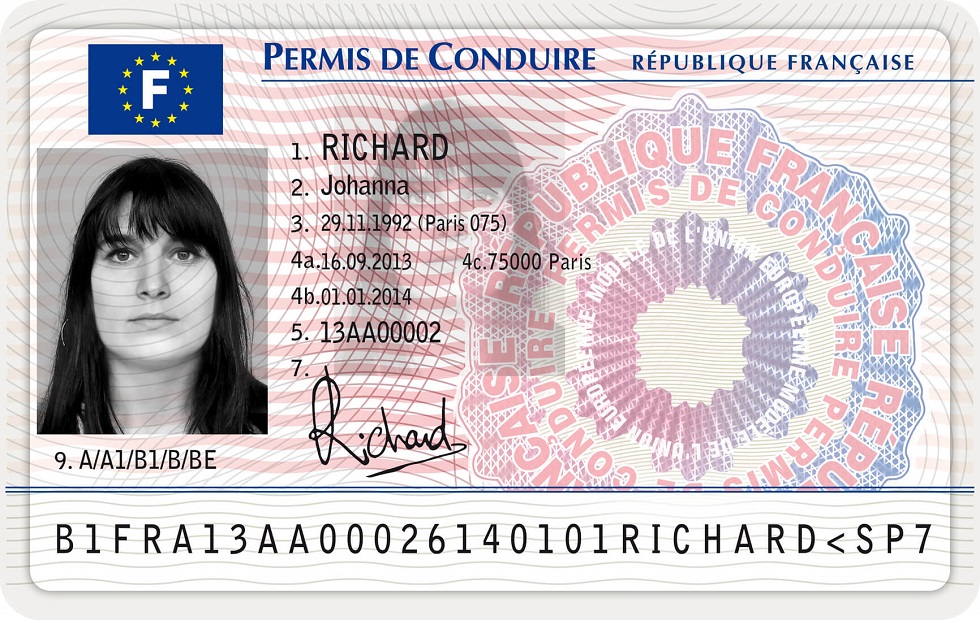 Getting your license If you've just completed your French driving test or are an expat driver moving to France, getting a license in France can be quite a challenge. There are certain rules and licence prerequisites that you need to be aware of in order to avoid being stopped by the police or having an accident due to invalid driving documents. To avoid any hassles, it's recommended to obtain an International Driving Permit in advance. This small piece of paper converts your license into a variety of languages and is required to be carried with you when you travel across the globe. These are inexpensive ($20) and are easily obtainable from your local AAA branch. Car rental companies too accept these. Many expats are able to swap their licenses to one that is a French one, provided that their country of origin has reciprocal agreements with France. The process can last between a few weeks to several months depending on the prefecture's work load. You'll also require two passport photos taken recently along with a medical certificate and two self addressed envelopes. If you don't have a valid ID or your foreign driving permit is expired, you'll need take a theoretical and practical exam before obtaining an official license. People with disabilities or specific health issues may need to undergo additional tests. In the event of the latter, a test will be conducted by an experienced doctor who will test your ability to drive. The test will consist of a theoretical examination and a drive in a parking lot and an interview with the examiner. All French drivers are required to carry their driving licence and registration for their vehicle at all times. French drivers also need to carry an insurance policy for their vehicles and cars. It is advisable to contact your insurance company to make sure your policy covers driving in France and is up to date. Getting your license in the country of your new home might seem daunting but with a little preparation and the assistance of a driving instructor it will be a breeze. While you don't have to attend an instructor to get your French driving license, they can help you with the process by handling all of the paperwork and scheduling your appointment for you.